
THANK YOU FOR SUBSCRIBING
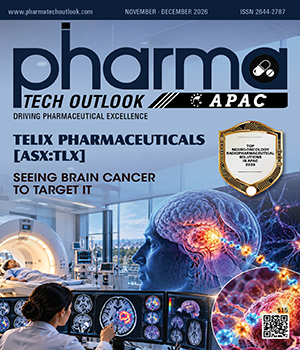
An MRI taken after brain cancer treatment can present a difficult question. An area of abnormal tissue may indicate that the tumor is growing again, or it may reflect changes caused by radiation and other treatments. The distinction is crucial because each possibility can lead to a different clinical decision. For neuro-oncologists, understanding what is happening inside the brain is essential to determining the next course of care. Yet imaging is only one part of the challenge. Delivering treatment directly to malignant tissue is also difficult, particularly when the blood-brain barrier blocks many therapeutic substances from entering brain tissue. Telix Pharmaceuticalsls [ASX:TLX] is addressing both challenges through molecularly targeted radiopharmaceuticals. Its neuro-oncology program uses the biological characteristics of brain tumors to develop diagnostic imaging agents and investigate targeted radiation therapies.
Exouza offers OpenPBM.ai, a next-generation pharmacy management administrative platform that empowers employers to better manage rising costs and navigate the complexities of the healthcare ecosystem. By combining intelligent technology, white-glove service and radical flexibility, it drives tangible financial savings, stronger employee engagement and a healthcare experience aligned with current expectations. This forward-thinking solution comes at a critical time. Pharmacy costs are now one of the largest drivers of healthcare spending, and can account for 25 percent of an employer’s total costs. Despite this, traditional pharmacy benefit managers (PBM) continue to rely on outdated, rigid, and opaque models that offer limited transparency, minimal control and little influence on outcomes. Compounding the issue is the high cost of specialty drugs. Although used by only about three percent of the population, the high price of these medications means they account for over half of total drug spending. Much of the complexity and inefficiency surrounding drug pricing is the widely used practice of negotiated rates between PBMs and pharmacies. But this practice does not provide real-time, market-based pricing across a variety of prescription drug suppliers. OpenPBM.ai is the first PBM platform that “shops” for the best price for prescription drugs from multiple sources, not just a contracted rate with a pharmacy, delivering unmatched value to both employers and employees. “Nearly every other industry allows shopping for prices with fully transparency to buyers. Now for the first time, Exouza brings this experience to prescription drug pricing and management. We saw the growing gap and approached it with a blank canvas,” says Susheel Jain, CEO. Rather than adapting outdated systems OpenPBM.ai was built from scratch as a modern, agile, and data-driven PBM platform. Its intuitive app and portal—covering administration, finance, access, clinical management and customer service—are designed with an open architecture to integrate best-in-class capabilities, giving customers the flexibility and customization they need now and in the future. Integration and interoperability with vetted partners and third party systems enables smooth data flow and real-time tracking of member and drug status at every stage. If an issue arises with one partner, OpenPBM.ai immediately identifies the next best route and guides the member to an alternative program or solution, ensuring continuity and support.

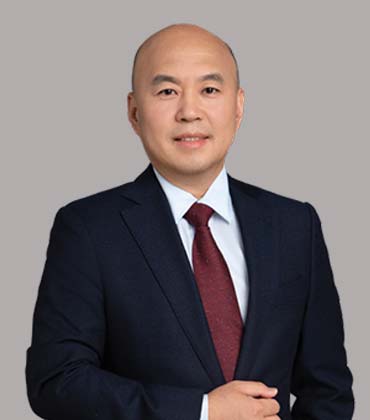
Leo Shi (LEI), Founder, Chairman of the Managing Board and CEO
eSonics approaches inhalation-device development from the premise that drug performance and device performance cannot be separated. Small variations in component tolerances can affect dose consistency, aerodynamic particle distribution and clinical outcomes, while regulations add requirements around design control, traceability and GMP-aligned manufacturing. Devices must also serve patients with different dexterity and respiratory conditions. “We believe that successful inhalation-product innovation depends not only on novel drugs, but also on tightly-coupled drug-device co-development,” says Leo Shi (LEI), Founder, Chairman of the Managing Board and CEO of the group. That thinking shapes eSonics’ work across aerosol, dry-powder, soft-mist and nasal delivery platforms. Rather than applying one engineering model to every device, it adapts its technical focus to the physics of each modality while maintaining common standards for material qualification, risk assessment and design-history documentation. For pharmaceutical partners without dedicated precision-engineering resources, this model reduces the risk of upfront tooling and prototyping through GMP-aligned prototyping and manufacturing support. From Requirements to Device Architecture For pressurized metered-dose aerosol devices, eSonics focuses on valve-canister precision, propellant compatibility, sealing and spray consistency. Dry-powder inhalers require attention to powder flow, dose metering and airflow-driven deagglomeration. Soft-mist devices shift the challenge toward micro-nozzle fluid dynamics, droplet generation and actuation precision, while nasal systems require control of plume geometry, droplet distribution, ergonomics and back-flow risk.

Choon How Wan, Founder and Managing Director, Pauline Chang, Director – Validation
Every capsule swallowed, injectable administered, and biologic delivered to a patient begins its journey in a highly controlled manufacturing environment where pharmaceutical-grade water plays an essential role in production. Growth, however, introduces a different challenge. As manufacturing capacity expands, the pharmaceutical water system often becomes one of the first constraints. Expanding it is rarely a matter of adding equipment alone. Existing infrastructure, validated processes, and production schedules must all be considered. Helping manufacturers overcome that challenge is Howern Wasser, a Malaysian engineering company that designs, integrates, and supports Purified Water (PW), Water for Injection (WFI), and Ultra-Pure Water (UPW) systems for pharmaceutical manufacturers. “We don’t ask manufacturers to adapt to our systems. We engineer our systems around their manufacturing reality,” says Choon How Wan, founder and managing director. That philosophy shapes Howern Wasser’s Engineering, Procurement and Construction Management (EPCM) approach. Instead of beginning with equipment selection, every project starts with understanding how a facility operates, what its manufacturing process requires, and how the water system must support both current production and future demand.
Genomics
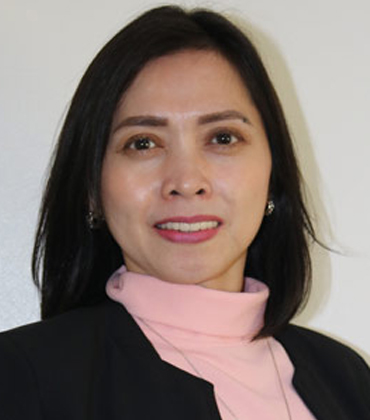
Imelda Leslie Rillon, Corporate Head of Quality & HSSE, Zuellig Pharma
Drug Discovery and Development
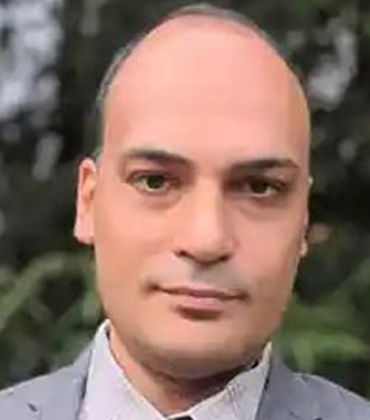
Safwan Kezbor, M.D., Global Medical Lead (Senior Medical Director), Clinical Development, Shionogi Inc
Pharma Manufacturing

Dottie Barr, Senior Vice President Manufacturing & Technical Operations, Lantheus [NASDAQ: LNTH]
eClinical Trial Management
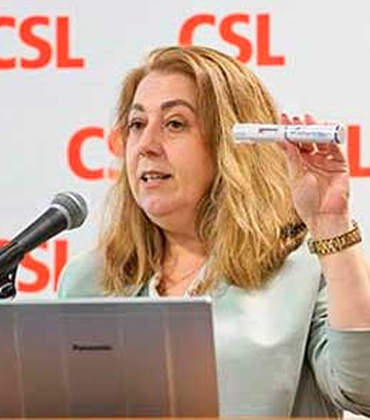
Rose Fida, Executive Director, Program & Performance Excellence, Global R&D Portfolio & Operations Excellence, CSL [ASX: CSL]

Ashley Preston, SVP Global Regulatory Affairs & Quality Assurance, BlossomHill Therapeutics, Inc.
CRO
Ming Li, Director of Bioanalytical and Biomarker Outsourcing Operations, Alexion Pharmaceuticals
David Short, Chief Quality Officer, QuVa Pharma
APAC inhalation device manufacturing advances respiratory care through precision engineering, automation, connectivity, quality, sustainability, and patient-focused design.
Pharmaceutical water engineering services support APAC manufacturers through reliable water systems, regulatory compliance, operational efficiency, and sustainability.
Advancing Pharmaceutical Innovation through Science and Precision
Our cover story features Telix Pharmaceuticals [ASX:TLX], recognized as the Top Neuro-Oncology Radiopharmaceutical Solutions in APAC 2026. Its neuro-oncology program combines molecular imaging with investigational targeted radiation therapies. Pixclara (floretyrosine F 18) received U.S. FDA approval to help distinguish recurrent or progressive glioma from treatment-related changes, giving clinicians additional information when assessing patients. Telix is also investigating TLX101-Tx in Phase 3 for recurrent glioblastoma as part of its work on targeted radiopharmaceutical treatments.
eSonics, named the Inhalation Drug Delivery Device Manufacturing Company of the Year in Asia 2026, works on precision engineering and drugdevice development. Its product capabilities include aerosol, dry-powder, softmist and nasal delivery platforms. The company works with pharmaceutical partners on formulation compatibility, prototyping, verification and regulatory documentation, addressing device-performance requirements that can complicate the development process.
Howern Wasser, recognized as the Top Pharmaceutical Water Engineering Services in APAC 2026, supplies Purified Water, Water for Injection and Ultra-Pure Water systems. The company offers engineering services, lifecycle support and remote monitoring to help pharmaceutical manufacturers expand facilities, upgrade existing systems and keep production running while meeting water quality requirements.
Contributor Suci Ameliya Reza Zairizal, Associate Manager at Novugen, talks about generic drug development and the challenges surrounding bioequivalence, strategic sourcing, cost control and higher-value generics. Safwan Kezbor, M.D., Medical Director, Clinical Development at Shionogi Inc., discusses first-in-human study design and how early pharmacokinetic, biomarker and safety findings can help researchers decide what comes next in clinical development.
Throughout this issue, the focus remains on the work behind pharmaceutical development. From designing drug delivery devices and maintaining water systems to evaluating clinical evidence, these companies and contributors examine the decisions and technical requirements involved in developing effective medicines and making treatments accessible to patients.