THANK YOU FOR SUBSCRIBING

Pharma Tech Outlook Weekly Brief
Be first to read the latest tech news, Industry Leader's Insights, and CIO interviews of medium and large enterprises exclusively from Pharma Tech Outlook
For Fuso Pharmaceutical Industries, dialysis medicines represent a life-support responsibility. The company stands at the center of Japan’s dialysis ecosystem, advancing renal care through clinically validated hemodialysis solutions that balance centralized delivery with individualized patient management across diverse clinical settings. Its fully integrated supply infrastructure and extensive product lineup ensure that healthcare providers receive uninterrupted access to dialysis solutions. Fuso Pharmaceutical Industries’s legacy began in 1964 with the launch of Japan’s first dialysis solution for artificial kidneys. Over six decades, a continued focus on innovation and supply stability has helped the company maintain market leadership and earn deep trust across the healthcare community. Fuso Pharmaceutical Industries focuses on overcoming the difficulties researchers and clinicians face when developing dialysis therapies. Dialysis patients often contend with more than kidney failure, living with comorbidities such as hypertension, diabetes, cardiovascular disease, and bone metabolism disorders. These clinical complexities make delivering effective dialysis solutions particularly challenging. “We support the efficiency and safety by providing products suitable for the equipment of each dialysis center,” says Mikio Toda, President and representative director. Fuso Pharmaceutical Industries’s Kindaly Dialysis Solutions offers a wide range of products with finely adjusted electrolyte and glucose compositions tailored to evolving patient backgrounds and shifts in the treatment environment. The flagship series is designed specifically for Japan’s dialysis environment, where approximately 97 percent of patients undergo hemodialysis or related treatments using central dialysis fluid delivery systems (CDDS). Within this system, dialysis fluids are regulated and approved as pharmaceuticals.
Pharmaceutical companies are increasingly recognizing the pivotal role of user-friendly packaging in optimizing medication management and safety. Clear labels, easy to-open designs, and simple disposal procedures are imperative for enhancing the user experience and fostering trust in the product and brand. TOYAMA SUGAKI, an innovative packaging manufacturer specializing in design, printing, and processing, takes a unique approach to improving pharmaceutical packaging. The company actively engages with pharmacists, seeking their valuable opinions on pharmaceutical packaging. With these insights in hand, TOYAMA SUGAKI meticulously refines the shape and design of the packaging, introducing novel functionalities, and presenting them to pharmaceutical manufacturers. “We provide pharmaceutical manufacturers with a wealth of data on user needs. This information helps them solve various packaging problems,” says Takao Sugaki, president of TOYAMA SUGAKI. Prior to the initiation of these efforts, numerous pharmacists voiced concerns about challenges associated with prescription drug packaging. Issues included difficulties in opening certain packages, problems with lids that couldn’t be closed once opened, and the time-consuming process of disassembling packaging for disposal. These problems persisted due to limited channels for users to report packaging issues to pharmaceutical manufacturers, coupled with a lack of awareness regarding the real-world usage scenarios of the packages. Directly engaging with dispensing sites and gathering feedback from frontline workers, TOYAMA SUGAKI has successfully bridged this gap. Over the course of more than ten years, these efforts have contributed to a significant enhancement in the user-friendliness of pharmaceutical packaging. The incidences of difficult-to-open or non-resealable packaging have notably decreased, and many packages now incorporate features designed to alleviate user burdens. One of the functions developed is the ‘One Shot Disposal’ feature, which enables users to crush an empty box effortlessly by simply pressing its corner. The innovative approach involves incorporating perforations in different positions compared to traditional packaging.
Herb Ulmer, Chief Scientist, Ella Qu, General Manager
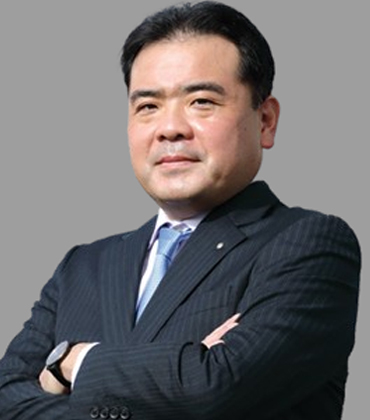
Once regarded as passive additives, excipients have taken on a far more strategic role in pharmaceutical development. No longer just fillers or binders, these materials now directly influence key formulation attributes, such as bioavailability, mechanical integrity, processability and shelf stability. With regulatory expectations growing more exacting and formulation windows tightening, the ability to predict and optimize excipient behavior within complex drug systems has become a defining capability for forward-thinking developers. That’s where Boai NKY Pharmaceuticals leads the market today. Rooted in advanced materials science, NKY designs excipients that not only meet monograph specifications but anticipate the functional realities of modern drug delivery. Every grade is developed with formulation behavior in mind, ensuring consistency across batches, platforms and regulatory environments. Whether addressing solubility challenges, scale-up risks or long-term stability, NKY’s excipients are built to perform where it matters most: inside the finished dose. “Knowing the chemistry is foundational, but it’s only part of the equation,” says Dr. Herb Ulmer, chief scientist. “Our work begins where the datasheet ends. We’re focused on how the excipient performs across the lifecycle, from bench to batch to shelf.” Specializing in polyvinylpyrrolidone (PVP) and PVM/ MA copolymers, NKY serves formulators working across pharmaceuticals, personal care, and food industries. Each excipient is developed considering how it would behave under compression, respond in high-shear environments, interact over time with other actives and withstand real-world storage and transport conditions. Engineering excipients with functional resilience in mind means fewer surprises during tech transfer, reduced formulation drift over time and more consistent performance across global manufacturing sites. Where Formulation Challenges Meet Functional Chemistry While most PVP suppliers focus on meeting purity benchmarks and regulatory checklists, NKY takes the next step, helping clients shift from trial-and-error to performance-driven product development.
eClinical Trial Management
Haichen Yang, MD, MA, MBA, Vice President, Clinical Research, Amicus Therapeutics Inc
Pharma Manufacturing
Dr. Israfil Merican, MD, MHM, Director of Pharmaniaga Marketing Sdn Bhd, Pharmaniaga Berhad
Pharmaceutical Distributor
Suci Ameliya Reza Zairizal, Associate Manager, Novugen Pharma
Pharma Manufacturing

Raymond R. Tjandrawinata, Director of Business Development and Scientific Affairs, Dexa Medica
Pharma Consulting

Sarah Tregenza, APAC Oncology Medical Affairs Director, Pierre Fabre Group

CDMO
Yvonne Ware, Associate Director, Manufacturing Operations, BioNTech

eClinical Trial Management
Dawn Niccum, Executive Vice President, QA & Compliance, inSeption Group
Dialysis drug development in APAC grows through rising kidney disease burden, biotech innovation, regulatory support, personalized therapies, and expanding clinical and commercial applications.
Advanced pharmaceutical packaging enhances compliance, product protection, sustainability, and supply chain transparency across expanding global healthcare markets.
Elevating Standards in Renal Therapeutics across APAC
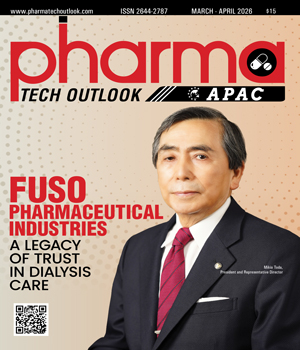
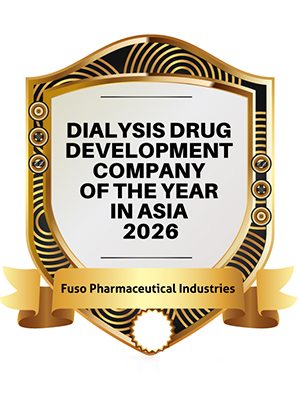
Recognized as Dialysis Drug Development Company of the Year 2026, Fuso Pharmaceutical Industries has built its leadership on six decades of focused executison in renal care. Since introducing Japan’s first dialysis solution for artificial kidneys in 1964, the company has expanded to more than 30 dialysis drug types and continuously refined electrolyte compositions in line with evolving clinical practice. Its Kindaly Dialysis Solutions portfolio reflects close engagement with treatment realities, adjusting potassium, magnesium, and calcium concentrations to address hyperkalemia management, bone metabolism disorders, and the needs of an aging dialysis population.
Equally significant is its robust manufacturing and logistics infrastructure across eastern and western Japan, designed to ensure an uninterrupted supply of life support medicines even during natural disruptions. Parallel R&D initiatives, including the development of DMX 200 for focal segmental glomerulosclerosis under an international Phase 3 evaluation, reinforce its commitment to advancing renal therapeutics beyond fluid formulations.
This issue also recognizes broader pharmaceutical disciplines shaping dialysis and adjacent therapies. Suci Ameliya Reza Zairizal, Associate Manager at Novugen, outlines the structural challenges in generic drug development as well as compressed pricing dynamics that demand strategic cost control and lean operations. Complementing this perspective, Raymond R. Tjandrawinata, Director of Research and Business Development at Dexa Medica, emphasizes rigorous quality assurance, excipient testing, documentation integrity, and supply chain vigilance as non-negotiable safeguards for patient safety.
Together, these insights reinforce a central message. Dialysis drug development leadership rests on disciplined science, resilient supply systems, and uncompromising quality governance. We invite you to explore this edition of Pharma Tech Outlook APAC and engage with the operational frameworks shaping the next chapter of renal care.