

THANK YOU FOR SUBSCRIBING

Pharma Tech Outlook Weekly Brief
Be first to read the latest tech news, Industry Leader's Insights, and CIO interviews of medium and large enterprises exclusively from Pharma Tech Outlook


 Joo-sung James Yang, Vice President and Seok-woo Kris Choi, Sr. Vice President
“As an experienced CDMO, we are capable of handling both mRNA production and LNP (Lipid Nano Particle) formulation together,” says James, Joo-sung, Yang, Vice President (Head of mRNA Business Development Div.).
ST Pharm upholds the idea that the development of mRNA-based drugs can overcome the shortcomings of existing recombinant protein-based drugs. mRNA therapeutics can target previously undruggable pathways and have fewer adverse effects due to natural protein engineering inside the body. Driven by the scope to improve clinical outcomes through mRNA drugs, ST Pharm connects all aspects of mRNA drug development to clinical and commercialized production.
Regarding LNP technology, ST Pharm has three different LNP platform strategies named ‘In-licensed LNP, STLNP®, and SmartLNP®. In-licensed LNP has been globally recognized as one among the best of its kind, having been applied to COVID-19 mRNA vaccine development. Likewise, STLNP® is the first-generation LNP developed for use in the mRNA CDMO business; it can be applied to cancer and autoimmune diseases. ST Pharm’s SmartLNP® (second-generation LNP), developed in collaborations with Ewha Women’s University in KOREA, is focused on increasing stability and improving immune response.
The company’s CDMO business is characterized by its flexibility and the ability to offer customized services in accordance with the needs of clients. For instance, ST Pharm can help clients right from the designing stage of development all the way through to enhancing the genetic sequence of the targeted protein, thereby producing plasma and mRNA LNP. With the investment and support from big global companies and government bodies, ST Pharm aims to expand its mRNA and GMP facility, in turn, contributing to the healthcare sector worldwide, especially in low income countries.
Company
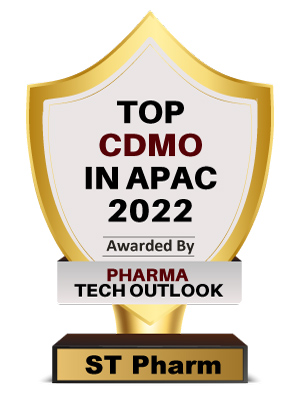
ST Pharm
Management
Joo-sung James Yang, Vice President and Seok-woo Kris Choi, Sr. Vice President
Description
ST Pharm Co. Ltd. is an Active Pharmaceutical Ingredient (API) contract development and manufacturing organization (CDMO) in the Republic of Korea and is a one-stop shop for mRNA drug development, Non-clinical animal safety CRO service, and IND filing as well.

The current expansion responds to the rising demand for oligonucleotide therapeutics, encompassing ASO, siRNA, and CRISPR technologies. This expansion not only aims to increase capacity from 6.4 mol to 14 mol but also to enhance overall capabilities.
To broaden its operational scope, the new facility will be designed to accommodate various production scales. Initially, it will introduce three new production lines with capacities of 1.8 mol (large scale), 400 mmol (mid scale), and 100 mmol (small scale). The facility also possesses the flexibility to add two more lines for future growth.
With a total investment of $110 million USD, the construction of the new oligonucleotide facility at ST Pharm Banwol Campus, scheduled for completion in 2025, will cover approximately 3,300 square meters (10,900㎡) and stand at a height of 60 meters across 7 floors.
This state-of-the-art facility will incorporate automation and digitization to streamline operations, leveraging existing knowledge for enhanced productivity, robustness, and agility, leading to reduced labor costs and improved overall cost-efficiency.
Furthermore, ST Pharm is committed to reducing its carbon footprint and advancing sustainability. The new facility will implement waste recycling, water-saving processes, and introduce innovative technologies that extend the lifespan of filters and promote energy-efficient practices.
Research & Markets predicts substantial growth in the oligonucleotide therapeutics market, projecting an increase from $7.70 billion USD in 2021 to $16.36 billion USD in 2030, reflecting a robust CAGR of 11.8% (Source: Data Bridge 2022, Oligonucleotide Synthesis Market Research Report). Initially utilized for rare disease treatments, oligonucleotides are now being applied to chronic diseases and beyond, driving significant global demand. Notable examples include Novartis' Inclisiran for cholesterol treatment and Pelacarsen for cardiovascular disease.