

THANK YOU FOR SUBSCRIBING

Pharma Tech Outlook Weekly Brief
Be first to read the latest tech news, Industry Leader's Insights, and CIO interviews of medium and large enterprises exclusively from Pharma Tech Outlook


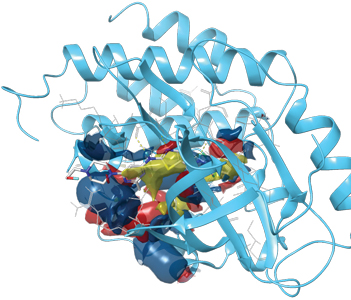 In this landscape, computational approaches are playing an increasingly important role in supporting research and development. By enabling scientists to model and simulate molecular behavior before synthesis and testing, these methods provide an additional layer of insight that can inform decision-making across discovery workflows.
Schrödinger [NASDAQ:SDGR] operates within this space as a computational platform company focused on molecular modeling and simulation. Its platform integrates physics-based methods with computational tools to support drug discovery and materials science research.
From Experimental Iteration to Predictive Molecular Design
Traditional drug discovery has relied heavily on iterative experimentation, where compounds are synthesized and tested repeatedly to identify promising candidates. While this approach remains fundamental, it can be resource-intensive and time-consuming, particularly when dealing with complex molecular systems.
As traditional drug discovery relies on experimental iteration, computational tools now offer an alternative approach to streamline this process. By simulating molecular interactions and predicting properties in advance, researchers can gain insights before committing to physical experiments.
Schrödinger's platform provides a more structured and informed discovery process by integrating computational modeling with experimental validation.
This allows for more informed prioritization of compounds and can help refine design strategies earlier in the workflow.
This shift does not replace experimental work but complements it. Computational modeling serves as a decision-support layer, helping researchers focus their efforts on candidates that are more likely to meet specific criteria.
Schrödinger emphasizes predictive modeling as a core component of molecular discovery.
At the center of Schrödinger’s approach is a platform built on physics-based modeling, particularly in the area of molecular simulation. These methods are designed to predict how molecules behave under different conditions, including how they interact with biological targets.
By applying principles from physics and computational chemistry, the platform enables researchers to evaluate molecular properties such as binding affinity, stability and conformational behavior. These insights can inform decisions about which compounds to advance for further study.
The result is a system that supports more structured evaluation of molecular candidates, helping researchers navigate the complexity of drug discovery with greater clarity.
Supporting Molecular Design and Optimization
One of the key applications of computational modeling in drug discovery is the design and optimization of candidate molecules. Rather than relying solely on experimental iteration, researchers can use modeling tools to explore variations in molecular structure and predict their potential impact.
This allows for a more targeted exploration of chemical space, where potential candidates can be refined before synthesis. While experimental validation remains essential, computational modeling provides a way to narrow down options and focus resources more effectively.
 By supporting design decisions at this stage, the platform contributes to a more structured and informed discovery process.
Drug discovery encompasses a variety of stages, from early-stage research to preclinical development. Integrating computational tools into these workflows requires systems that can align with existing research processes.
Schrödinger’s platform is designed to support this integration by providing tools that can be used alongside experimental methods. Researchers can incorporate modeling and simulation into their workflows without replacing established practices, allowing for a more balanced approach to discovery.
This integration enables teams to move between computational and experimental work more seamlessly. Insights from modeling can inform experimental design, while the results can be used to refine computational models.
Such an iterative interaction between computation and experimentation supports a more comprehensive understanding of molecular systems.
Extending Applications Across Drug Discovery
Computational modeling is applicable across multiple stages of drug discovery, from target identification to lead optimization. Schrödinger’s platform supports a range of these activities by providing tools that can be adapted to different research needs.
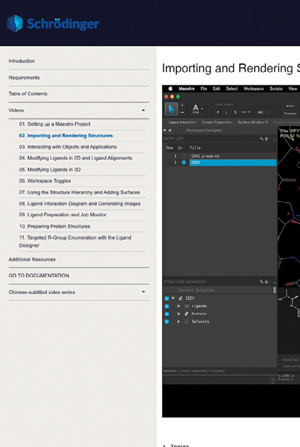 In early-stage discovery, modeling can help identify potential interactions between molecules and biological targets. During lead optimization, it can support the refinement of molecular properties to meet specific criteria. This flexibility allows the platform to be used across different phases of research, supporting continuity in how molecular data is analyzed and applied.
One of the challenges in drug discovery is managing uncertainty. Not all molecular candidates will succeed, and predicting outcomes can be difficult given the complexity of biological systems. Computational modeling does not eliminate this uncertainty, but it can help reduce it by providing additional information about molecular behavior. By offering insights into potential interactions and properties, the platform supports more informed decision-making.
Researchers can use this information to prioritize candidates, design experiments more effectively and allocate resources with greater confidence. This contributes to a more structured approach to navigating the discovery process.
As the life sciences industry continues to evolve, the role of computational methods in drug discovery is becoming more pronounced. Rather than relying solely on experimental iteration, organizations are increasingly incorporating predictive tools into their workflows.
By enabling researchers to evaluate and refine candidates before experimental validation, the platform contributes to a more informed and systematic approach to research.
In an environment where complexity and uncertainty are inherent, the ability to bring predictive insight into the discovery process is becoming an important factor in how organizations approach molecular design and development.
What Are AI-Driven Molecular Discovery Platforms?
AI-Driven Molecular Discovery Platforms combine computational chemistry, predictive modeling and data analysis to help researchers evaluate molecules before extensive lab testing. They are used to study how candidates may interact with biological targets, how structural changes may affect performance and where uncertainty exists in a discovery program. The goal is not to remove experimentation but to make early decisions more informed, structured and easier to connect with downstream research activity. This makes them useful in complex programs where each design choice can affect cost, timing and scientific direction.
How Does Schrödinger Support AI-Driven Molecular Discovery Platforms?
Schrödinger supports AI-Driven Molecular Discovery Platforms through a computational platform focused on molecular modeling and simulation. Its work connects physics-based methods with computational tools, helping researchers assess molecular behavior before synthesis and testing. The platform also extends beyond drug discovery into materials science, reflecting a broader use of molecular simulation in research workflows where chemical behavior, structure and performance must be evaluated before resources are committed.
What Capabilities Matter in Molecular Discovery Software?
Important capabilities include molecular simulation, property prediction, compound comparison, workflow integration and tools that help teams interpret complex chemical and biological relationships. AI-Driven Molecular Discovery Platforms should support research decisions without disconnecting them from experimental validation. Useful systems help narrow candidate options, guide design changes and improve the consistency of how discovery data is evaluated across teams, stages and scientific assumptions. They should also help researchers review alternatives without losing sight of practical development constraints.
Where Do Predictive Modeling Tools Add Value in Drug Discovery?
Predictive modeling tools add value when teams need to prioritize molecules, understand binding behavior, assess stability or explore chemical space more efficiently. AI-Driven Molecular Discovery Platforms can support target assessment, early candidate selection and lead optimization by giving researchers a clearer view of possible outcomes before committing resources to physical experiments. This can help make discovery programs less dependent on trial-and-error cycles alone and more capable of linking computational insight with experimental planning.
How Can Schrödinger’s Platform Help Reduce Discovery Uncertainty?
Schrödinger’s platform helps reduce discovery uncertainty by enabling researchers to evaluate molecular properties such as binding affinity, stability and conformational behavior. Its approach brings physics-based modeling into the design process so teams can compare candidates in a virtual environment. In AI-Driven Molecular Discovery Platforms, this type of insight helps focus experimentation on molecules with stronger supporting evidence while preserving the need for validation in the lab.
What Should Organizations Consider When Evaluating These Platforms?
Organizations should consider scientific rigor, usability, integration with existing research processes and the platform’s ability to connect computational insight with experimental work. AI-Driven Molecular Discovery Platforms are most valuable when they help teams move from broad exploration to practical candidate prioritization. Evaluation should focus on whether the platform improves clarity, consistency and decision-making across discovery programs without creating a separate workflow that is difficult to interpret or apply. The strongest fit is usually a platform that adds discipline without slowing scientific judgment.
Company
Schrödinger [NASDAQ:SDGR]
Management
Ramy Farid, Ph.D., President and CEO
Description
Schrödinger [NASDAQ:SDGR] develops computational platforms for molecular modeling and simulation, enabling predictive insights across drug discovery and materials science. By integrating physics-based methods with data-driven tools, it helps researchers design, evaluate and optimize molecular candidates, supporting more informed and efficient research workflows.


