THANK YOU FOR SUBSCRIBING

Pharma Tech Outlook Weekly Brief
Be first to read the latest tech news, Industry Leader's Insights, and CIO interviews of medium and large enterprises exclusively from Pharma Tech Outlook


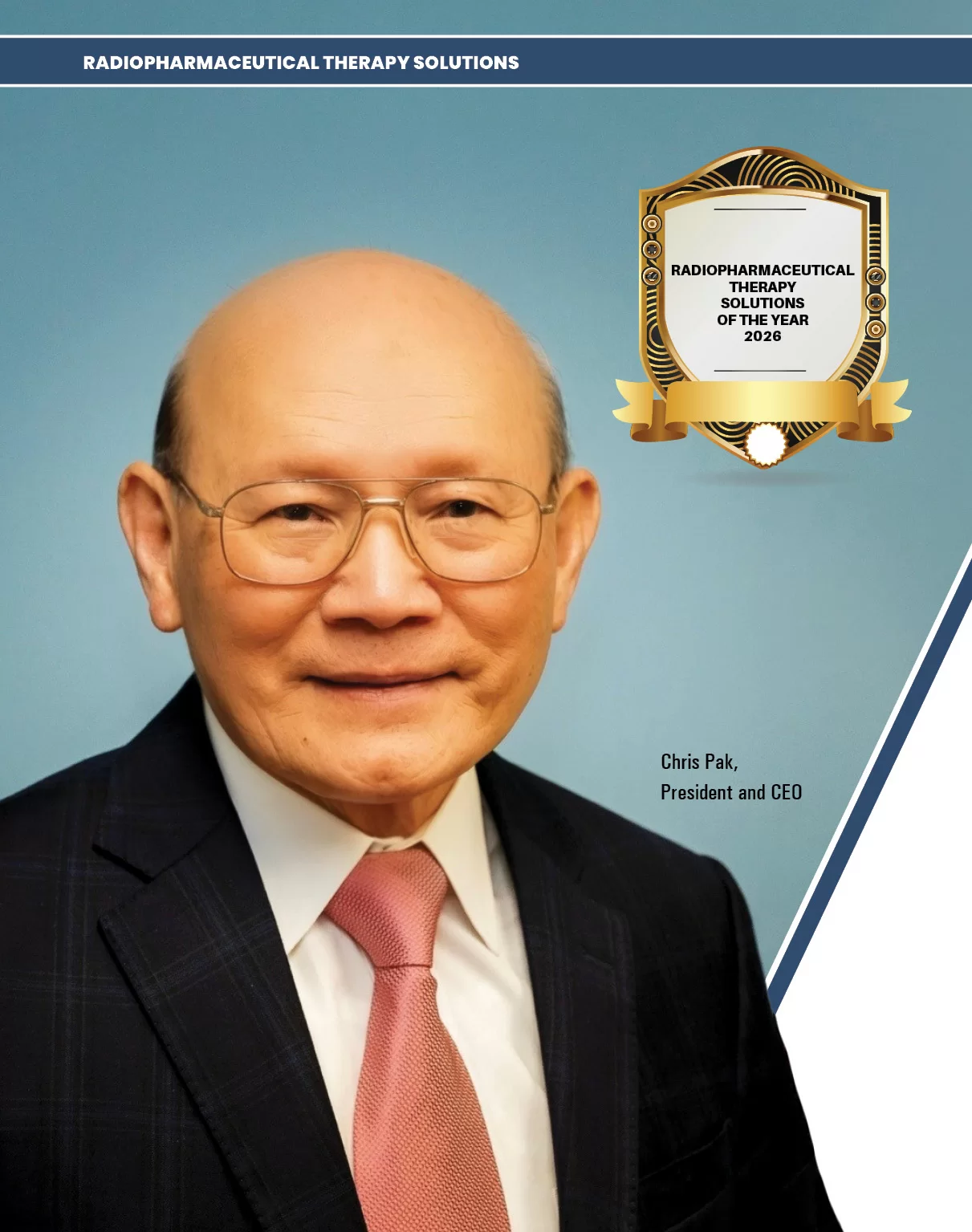
 Chris Pak, President and CEO
Improving drug delivery, not simply target recognition, may represent the next frontier in precision radiotheranostics.
Many radioligands circulate in the bloodstream for only a short time before being cleared by the kidneys. While increasing the administered radioactivity can partially compensate for this rapid clearance, it also exposes healthy tissues to additional radiation without solving the underlying pharmacokinetic limitation. The opportunity, therefore, is not merely to discover better molecular targets but to engineer smarter delivery systems that keep therapeutic agents in circulation longer and maximize tumor exposure.
EvaThera™: Reengineering Drug Delivery
Molecular Targeting Technologies Inc. (MTTI) was founded on a simple but ambitious question: What if the effectiveness of proven targeting molecules could be substantially enhanced through better pharmacokinetic delivery?
That question led to the development of EvaThera™, MTTI's proprietary albumin-binding platform. Rather than altering the biological mechanism that directs a radiopharmaceutical to cancer cells, EvaThera™ is designed to optimize how the therapeutic travels through the body before reaching its target. By extending systemic circulation and increasing opportunities for tumor uptake, the platform aims to improve the therapeutic index while reducing the amount of administered radioactivity required to achieve meaningful clinical activity.
"Our strategy is to deliver radiation more efficiently and more selectively, using albumin to transport the drug throughout the bloodstream while the tumor's much stronger receptor binding retains it precisely where it is needed," says Chris Pak, President and CEO of MTTI.
Harnessing the Body's Natural Transport System
EvaThera™ is built upon one of the body's most abundant circulating proteins: serum albumin. By incorporating an Evans Blue-derived albumin-binding moiety into a radiopharmaceutical, the molecule temporarily associates with albumin, avoiding rapid renal clearance and remaining in circulation long enough to encounter tumor tissue repeatedly. This reversible interaction increases the probability of tumor uptake without permanently altering the drug's biological targeting properties.
Pak often describes the concept using a simple analogy.
“The targeting molecule is like a bicycle carrying one passenger, while albumin is the bus, transporting many Evans Blue molecules throughout the bloodstream.”
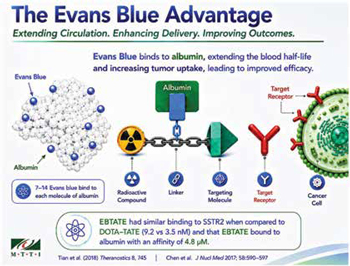 Once the albumin-bound complex reaches the tumor, the radiopharmaceutical dissociates, binds with far greater affinity to its intended receptor, and is rapidly internalized into cancer cells, where the radioactive payload can exert its therapeutic effect.
The elegance of EvaThera™ lies in its simplicity.
Albumin serves as the body's natural transportation network, while receptor-specific binding determines the final destination. By combining these two biological processes, the platform is designed to deliver more therapeutic radiation where it matters most—inside the tumor—while reducing unnecessary exposure to healthy tissues. This pharmacokinetic strategy forms the scientific foundation for MTTI's clinical programs and its broader vision for the future of precision radiotheranostics.
Giving Proven Ligands a Pharmacokinetic Upgrade
The rapid growth of radiopharmaceutical therapy has generated an expanding pipeline of promising molecular targets. Yet recent industry experience suggests that target recognition alone is not always sufficient to achieve clinical success. Even ligands with high receptor specificity may underperform if they cannot remain in circulation long enough to achieve adequate tumor exposure and retention. Increasingly, the industry's focus is expanding beyond target discovery to include pharmacokinetic optimization, tumor dosimetry and improvement of the therapeutic index.
Recent developments illustrate this challenge. Novartis discontinued development of its GRPR-targeted Lu-NeoB after clinical studies failed to demonstrate sufficient efficacy. While each program has unique scientific considerations, the experience underscores an important principle: successful radiopharmaceuticals require not only effective molecular targeting, but also efficient delivery and sustained tumor retention. EvaThera™ was designed specifically to address this often-overlooked aspect of therapeutic performance.
The future of radiotheranostics will be defined by delivering more therapy precisely where it belongs—and less where it doesn't. If we can consistently improve tumor retention while reducing unnecessary radiation exposure, we believe EvaThera™ has the potential to help establish a new benchmark for precision cancer therapy.
Rather than replacing proven targeting ligands, EvaThera™ enhances them. The platform incorporates MTTI's proprietary albumin-binding architecture into peptides and small molecules that have already demonstrated receptor specificity, extending systemic circulation while preserving their validated biological targeting. This strategy has the potential to improve tumor exposure without requiring the discovery of entirely new molecular targets.
For pharmaceutical partners, this represents more than a scientific innovation—it offers a practical development strategy.
Instead of abandoning promising ligands because of pharmacokinetic limitations, developers may be able to improve existing assets through EvaThera's delivery technology. By leveraging the conjugation chemistry, dosimetry expertise, and clinical experience established with EBTATE, companies could potentially reduce development risk, accelerate clinical translation, and unlock additional value from existing portfolios. One delivery platform, therefore, has the potential to support multiple differentiated therapeutic candidates and create broad licensing and strategic partnership opportunities.
The true value of any platform technology lies in its ability to extend beyond a single product. EBTATE serves as the first clinical validation of EvaThera™, but it is intended to be only the beginning. Designed as a modular, target-agnostic platform, EvaThera™ can be paired with different ligands and radionuclides to address diverse tumor types while tailoring pharmacokinetic performance to each biological target.
MTTI's second development program, EB-RGD, targets integrin αvβ3, a receptor associated with tumor angiogenesis, invasion, and metastasis. In patient-derived xenograft models of non-small cell lung cancer, EB-RGD achieved 6.5-fold greater tumor uptake than conventional RGD radiopharmaceuticals. Clinical imaging with ⁶⁴Cu-EB-RGD has also demonstrated encouraging tumor localization in patients with glioblastoma, with tumor-to-background contrast increasing over time as normal brain activity declined. Although therapeutic efficacy remains to be confirmed in future clinical studies, these findings suggest that the pharmacokinetic advantages demonstrated with EvaThera™ may be applicable across multiple molecular targets.
Beyond EB-RGD, MTTI is advancing additional programs targeting fibroblast activation protein (FAP) and gastrin-releasing peptide receptor (GRPR) using both actinium-225 and lutetium-177, selected according to each target's biological characteristics. Rather than pursuing a one-size-fits-all strategy, EvaThera™ is built on a consistent principle: preserve validated molecular targeting while engineering smarter drug delivery to maximize therapeutic benefit.
Building the Future of Precision Radiotheranostics
Developing next-generation radiopharmaceuticals requires far more than innovative chemistry. Success depends on integrating expertise across clinical medicine, radiochemistry, dosimetry, GMP manufacturing, regulatory science, and commercialization. Recognizing this complexity, Molecular Targeting Technologies Inc. (MTTI) has built its development strategy around collaboration with leading academic institutions, experienced manufacturing partners, and clinical investigators to accelerate the translation of scientific innovation into patient care.
MTTI's Phase I/II EBTATE program exemplifies this collaborative model. Working with Dr. Lisa Bodei of Memorial Sloan Kettering Cancer Center and other internationally recognized investigators, the company generated critical imaging, dosimetry, and safety data that established the first clinical validation of the EvaThera™ platform. This pharmacokinetic design is intended to achieve meaningful therapeutic activity using only approximately 12.5% of the administered radioactivity required for conventional PRRT while maintaining a favorable safety profile and the potential for comparable—or superior—efficacy.
EBTATE’s preclinical studies demonstrated up to 35-fold greater tumor uptake than ¹⁷⁷Lu-DOTA-TATE, while clinical studies confirmed approximately eight-fold higher tumor uptake and tumor retention for up to 15 days, compared with less than one week for conventional PRRT.
Building on these results, MTTI is expanding manufacturing capabilities, broadening its clinical network, advancing additional Evans Blue-based radiopharmaceutical candidates, and pursuing strategic partnerships to extend the platform across multiple molecular targets.
The next milestone is equally ambitious: demonstrating that the pharmacokinetic advantages observed with EBTATE can be consistently reproduced across different cancers, targeting ligands, and therapeutic radionuclides. Success would not simply validate another radiopharmaceutical—it would validate a new engineering approach to precision cancer therapy. As the field continues to evolve, optimizing drug delivery may become as important as discovering new biological targets.
A Four-Decade Vision, Reengineered
For Chris Pak, EvaThera™ represents the culmination of a scientific question that has guided his career for more than four decades: How can more therapeutic radiation reach cancer while less reaches healthy tissue?
That journey began during his graduate studies after watching an ABC News interview in which Peter Jennings spoke with Hilary Koprowski, MD, of the Wistar Institute about the emerging promise of monoclonal antibodies. The conversation inspired Pak to pursue a career dedicated to improving targeted cancer therapy. Over the ensuing decades, oncology advanced from monoclonal antibodies to precision medicine and now to radiotheranostics, yet the underlying objective has remained unchanged: deliver treatment more precisely while minimizing unintended toxicity. EvaThera™ reflects that lifelong pursuit.
Recognition as Pharma Tech Outlook's Radiopharmaceutical Therapy Solutions of the Year 2026 acknowledges the progress achieved to date, but MTTI views the award as a milestone rather than a destination. The company's mission remains focused on advancing a platform capable of enhancing the performance of targeted radiopharmaceuticals across multiple cancer indications through smarter pharmacokinetic engineering.
"The future of radiotheranostics will not be defined simply by discovering new molecular targets," says Pak. “It will be defined by delivering more therapy precisely where it belongs—and less where it doesn't. If we can consistently improve tumor retention while reducing unnecessary radiation exposure, we believe EvaThera™ has the potential to help establish a new benchmark for precision cancer therapy.”
As radiopharmaceutical therapy enters its next phase of growth, MTTI believes the future belongs not only to better medicines but also to better delivery technologies—innovations that maximize therapeutic benefit, reduce treatment burden, and ultimately improve the lives of patients living with cancer.
What Are Radiopharmaceutical Therapy Solutions?
Radiopharmaceutical Therapy Solutions combine a targeting component with a radioactive payload designed to deliver therapeutic radiation to disease sites. The targeting mechanism directs the radiopharmaceutical toward a specific biological receptor or molecular feature, while the radioactive component provides the treatment effect. Effective Radiopharmaceutical Therapy Solutions therefore depend on more than identifying the right target. Circulation time, tumor uptake, retention, biodistribution and radiation exposure across healthy tissues all influence whether a therapy can deliver a useful dose.
How Does Molecular Targeting Technologies Inc. Advance Radiopharmaceutical Therapy Solutions?
Molecular Targeting Technologies Inc. focuses on improving how long targeted radiopharmaceuticals remain in circulation and at the tumor site. Its Evans Blue platform uses reversible albumin binding to extend circulation while maintaining receptor-directed uptake. EBTATE applies this approach to SSTR2-positive neuroendocrine tumors, while EBRGD extends the same delivery concept to cancers expressing integrin αvβ3. These Radiopharmaceutical Therapy Solutions are built around a reusable delivery mechanism rather than a separate development model for each target, allowing the platform to support different targeting ligands and radionuclides.
Why Is Tumor Retention Important in Targeted Radiopharmaceutical Treatment?
A radiopharmaceutical may recognize a tumor-associated receptor yet still provide limited therapeutic benefit if it leaves the bloodstream or tumor too quickly. Longer tumor residence can increase the opportunity to deliver radiation to the intended site, but it must be evaluated alongside exposure to healthy organs. Radiopharmaceutical Therapy Solutions should therefore be assessed through dosimetry, tissue distribution and cumulative radiation exposure rather than uptake alone. Kidney exposure, bone marrow tolerance and recovery between treatment cycles can all affect whether a dosing strategy is clinically practical.
What Evidence Matters When Evaluating Radiopharmaceutical Therapy Solutions?
Evaluation should extend beyond early imaging or small clinical cohorts. Useful evidence can connect preclinical findings with human biodistribution, retention and treatment outcomes. Radiopharmaceutical Therapy Solutions may be assessed through response data, duration of retention, progression-related outcomes, toxicity and dose-ranging results. These measures should be considered together because stronger uptake alone does not establish therapeutic value. A practical treatment approach also requires evidence that the dosing window and administered activity can support repeatable clinical delivery without creating an unfavorable safety burden.
How Do Platform Technologies Support Broader Radiopharmaceutical Development?
A platform can support broader development when its core delivery mechanism works across multiple biological targets. Radiopharmaceutical Therapy Solutions that use a consistent carrier or binding strategy can help developers apply similar methods for imaging, dosimetry, safety testing and therapeutic monitoring across programs. However, a platform must maintain target affinity and show consistent performance as developers introduce new ligands or radionuclides. A common technical foundation has greater value when it supports a clear and consistent development process instead of simply bringing unrelated candidates under one platform.
What Practical Factors Shape the Adoption of Radiopharmaceutical Therapy Solutions?
Scientific performance is only one part of adoption. Radiopharmaceutical Therapy Solutions must also fit the operational demands of treatment delivery. Isotope availability, patient scheduling, radiation handling, treatment frequency and post-treatment monitoring can influence implementation. Molecular Targeting Technologies Inc. has generated clinical evidence around higher uptake, longer retention, lower cumulative administered activity and fewer treatment cycles for EBTATE. Such factors may affect both treatment planning and the overall burden associated with therapy delivery. The strongest approaches connect pharmacokinetic performance with practical dosing decisions and their consequences for treatment sites.
Company
Molecular Targeting Technologies, Inc.
Management
Chris Pak, President and CEO
Description
Molecular Targeting Technologies, Inc. (MTTI) develops next-generation radiopharmaceuticals through EvaThera™, its proprietary albumin-binding platform. By extending radioligand circulation, the technology enhances tumor uptake and retention, aiming to improve therapeutic efficacy while reducing administered radioactivity and patients’ overall treatment burden.