

THANK YOU FOR SUBSCRIBING

Pharma Tech Outlook Weekly Brief
Be first to read the latest tech news, Industry Leader's Insights, and CIO interviews of medium and large enterprises exclusively from Pharma Tech Outlook
A featured contribution from Leadership Perspectives: a curated forum reserved for leaders nominated by our subscribers and vetted by our Pharma Tech Outlook APAC Advisory Board.

The Inflection Period is a new mental model that translates our unique capacity to understand end of life with the potential to influence the healthcare landscape - potentiate truly collaborative relationships based on physiologic certainties, true informed consent and patient-centricity resulting in better care. It is a cognitive framework predicated on undeniable physiologic certainty which enables us to expand beyond the linear algorithm.
Identification of the Inflection Period is essential so optimal care and direction may be provided by aligning relevant clinical strategies reflecting patient goals based on these realities.
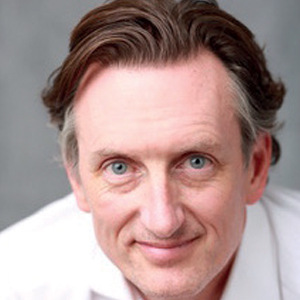
Dr. Timothy Ihrig is a well renowned proponent of offering care delivery with a human touch. He is globally recognized for bringing together his clinical and administrative expertise to system design for promoting population health management, care coordination, and care delivery for the vulnerable population. He has also applied his visionary approach to care delivery as the CMO of Crossroads Hospice & Palliative Care and as the CEO of Ihrig MD & Associates.
In conversation with MedTech Outlook, Dr. Ihrig discusses his understanding of risk as applied to healthcare contractual entities, micro and macro healthcare economics, population health, regulatory compliance from a system perspective, and the interaction of all these aspects. He also comments on how doctors and caregivers should hone a more esoteric perspective towards healthcare, thus focusing more on the overall quality of life while assisting critically ill patients in thinking about how to live their lives, rather than focusing on how their lives will end.
What are some of the major trends and challenges that are impacting the medtech space today?
Over the last five to 10 years, the changes in the medtech space, may it be patient engagement tech or diagnostics tech, has been focused on mitigating the financial vulnerability of health systems. There has been an exponential growth in products meant to curb the costs of patient care, prevent admissions and re-admissions, and find more ways to offer better care outside of hospitals.
With a strong emphasis on improving the efficiencies of patient care, the medtech space is less focused on the patients themselves, which poses the challenge of having a misaligned understanding of how to care for the most vulnerable population. Another issue that plagues the healthcare space today is that systems and technologies are aimed at offering the same kind of care to all, even the 10-15 percent of the population who need palliative care outside hospitals and healthcare facilities. These patients require a completely different care paradigm than the others.
Most healthcare providers drive healthcare reforms but fail to change the way they care for the vulnerable population. Technology has nonetheless enhanced the efficiencies of data collection, simulation, communication, transference, and enabling delivery of continued care. But it has not reformed care for the people, which is based on two major tenets. One of these is what truly matters to the individual in question, and the other is informing the individual about the absolute truth about the disease and trying to provide accurate care for it. But what it all comes down to is the fact that even after being backed by the latest technologies, we fail to improve the quality of life of individuals or increase the length of their lives. These aspects are, no doubt, an esoteric approach to patient care, but it gives a better understanding of how we, in many ways, are lacking the ability to incentivize the right things. Additionally, the regulatory and compliance norms that rely on the historical model of care delivery fall short of the understanding of the adequate ways to care for the vulnerable population.
How important is it to change the healthcare facilities and personnel to bring about a reform in the medtech space, and what is your approach to bringing this change?
According to me, it is multi-factorial. In the medical space today, some systems incentivize a linear algorithmic approach of clinical treatment and patient engagement, which, to a great extent, contradicts the physiologic inevitability of humans changing. The clinical intervention that comes in the way of change only makes the lives of the vulnerable population more deleterious and prevents most caregivers from looking at the whole picture of the individual and solely focusing on the specific disease he/ she is suffering from.
The change that needs to take place is a paradigm shift in understanding the physiological inevitability for the 10-15 percent of patients who are vulnerable, aged, and chronically ill, and providing the right kind of treatment and care, not just in the concluding days of their lives but right from the diagnosis and walk through the process till the end, with the patients.
We as physicians need to understand the inevitability of life itself as well the constancy of change and deliver options that go beyond the bounds of the linear algorithmic model because these ultimately cease to potentiate the improvement for patients. By doing so, we can think differently about the vulnerable population and initiate a reformed care model that will result in better outcomes, higher patient satisfaction, a longer and better quality of life, and better financial outcomes as well. With this ideology itself, I personally have been able to achieve a 70 percent median per capita reduction in expenditures for this population and almost zero hospitalization, which is not just by leveraging the technologies but by incentivizing the right methods of delivering care differently.
How do you identify the needs of patients while bringing about the reforms in the MedTech Space?
According to my own clinical experience, firstly, as a provider, I have to overcome the barriers of conventional training and education and accept the inevitability of life, change, and death. Across the vulnerable population, who prove to be the fulcrum of the entire healthcare industry, there needs to be a change of our belief systems that we can conquer death itself, which alone can lead us to honor our fiduciary responsibilities of caring for a human being in the most altruistic manner. This change can be spurred by the understanding of what is sacred to the patient and how we can help the patient through their journey of how they want to live. Again, I believe caring is very different from practicing medicine, and some initiatives use this philosophical foundation and translate it through technology platforms, one being a social platform that encourages patient engagement with their families and caregivers. If we can overcome the drudgery of social isolation and couple that with informed consent, that will surely drive the adequate care for everyone.
What would be the single piece of advice you would like to give to the CMO community?
I think we have to draw on history and understand that some absolute truths exist and can’t be altered or changed. On the same lines, we as physicians or caregivers can’t change the inevitable, but just change the trajectory of the patients’ journey with clinical intervention. But even then, there is only a point when patients’ bodies will respond in the same way to all clinical and medical endeavors, and when that inflection point is reached, our methods need to change according to the patients’ ability to recover and heal. This inflection point is the time for a change, and if we identify it, we can offer the change in our care, thus proving to be successful in bending the cost curbs, increasing the satisfaction for patients, and helping them transition from just being alive to be living their lives.
