

THANK YOU FOR SUBSCRIBING

Pharma Tech Outlook Weekly Brief
Be first to read the latest tech news, Industry Leader's Insights, and CIO interviews of medium and large enterprises exclusively from Pharma Tech Outlook


 Hironao Nakajima, President and Representative Executive Officer
A clinical trial may begin with strong science and a well-constructed protocol, but its success is decided at the hospital site. When trial procedures do not align with the realities of patient care, enrollment slows and execution begins to vary across institutions.
In Japan, few organizations shape the front line of trial execution as much as EP-Link.
EP-Link is a site management organization (SMO). In Japan’s clinical development landscape, two types of primary vendors drive trial execution. A contract research organization (CRO) supports study sponsors, while an SMO supports the medical institutions that conduct trials. Each takes a distinct perspective.
“That distinction matters because the meaning of SMO in Japan differs from how the term is often understood in the U.S. and other global markets,” says Hironao Nakajima, president and representative executive officer.
EP-Link plays its role at a scale no competitor matches. As a top-tier organization with a strong industry presence, it commands the country’s largest clinical research coordinator (CRC) team across a network of affiliated sites spanning diverse therapeutic and disease areas.
That coverage density offers sponsors full site selection and feasibility services within a single structure. For a pharmaceutical company accustomed to piecing together site networks through traditional CRO arrangements, this is a more integrated approach.
“We consider this efficiency and the consolidation of communication to be one of our key differentiators,” says Nakajima.

EP-Link plays its role at a scale no competitor matches. As a top-tier organization with a strong industry presence, it commands the country’s largest clinical research coordinator (CRC) team across a network of affiliated sites spanning diverse therapeutic and disease areas.
How does EP-Link ensure consistency between clinical trial protocols and patient care processes?
EP-Link’s operating model is built around a simple premise. At medical institutions, where clinical trials meet everyday patient care, procedures outlined in the study protocol must be implemented consistently. Every operational layer serves that approach.
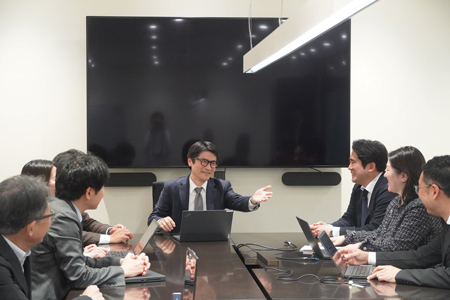 CRCs are the mechanism. Before a trial begins, detailed pre-study coordination is conducted with nursing, laboratory, pharmacy, medical administration and other relevant hospital departments. Medical institutions are aligned with each evaluation item and operational procedure. During the trial, on-site support and ongoing verification are provided. Protocol deviations are promptly documented and procedural inconsistencies are caught early.
“We use the operational knowledge and information accumulated across our network to minimize unnecessary operational variability so that the resulting data are compiled in a state that is fit for decision making,” says Nakajima.
Information collected under this discipline becomes easier to handle in review and analysis processes. Sponsors at key milestones can assess whether the necessary conditions are in place and clarify where particular attention should be focused.
Site management associates handle institutional review board (IRB) operations and the preparation, storage and management of clinical trial-related documents. This labor division reduces the burden on site staff. Investigators and hospital teams conduct trials smoothly while continuing regular patient care.
Why are data reliability and patient enrollment considered central pillars in clinical trials?
EP-Link’s contributions center on two pillars—data reliability and patient enrollment—each with a clearly defined role.
On the data reliability side, a dedicated quality management department supports audit and on-site inspection readiness at medical institutions across Japan. Standardized operating procedures and a robust quality control framework anchor the entire network to a single standard and give headquarters centralized visibility into progress at all investigational sites. Continuous compliance is the baseline. On the enrollment side, a specialized team centrally manages enrollment activities across all participating institutions. A CRC at each investigational site develops an enrollment plan, while a designated project lead oversees progress.
“Our headquarters project management function monitors and analyzes enrollment status across all sites and by working closely with project leads at each location, we centrally manage study progress on a national basis,” says Nakajima. “This team also serves as the primary contact point for sponsors and through regular communication, contributes to structured and steady clinical trials execution.”
EP-Link has completed patient registration within the timelines specified in many clinical trials.
“We share the latest regulatory developments and practical know-how through ongoing training programs for CRCs and project personnel,” says Nakajima. “We proactively identify factors that may impact study progress and take timely corrective actions. These systems allow us to achieve both consistent quality and strong enrollment performance, even within a large-scale site network.”
 Data reliability and patient enrollment priorities converge in a continuous feedback cycle. Through CRCs, EP-Link collects frontline observations from physicians and site staff, including patient flow patterns, patient-facing document comprehension, operational challenges related to visit schedules and examination procedures, differences in eligibility criteria interpretation and variations driven by regional characteristics, site size and specialization areas.
“This feedback is systematically collected and analyzed internally,” says Nakajima. “It feeds into more accurate feasibility assessments, enhancements to informed consent materials, increased screening efficiency, revisions to operational manuals and updates to training programs.”
CRCs also relay site-level challenges and patient perspectives directly to sponsors during the study planning phase. This closes the loop between the feasibility services EP-Link offers at the outset and the real-world insights its CRCs gather during execution. Sponsors evaluate study feasibility and the appropriateness of enrollment criteria before trial initiation. Frontline knowledge feeds continuously back into future clinical trials.
Technology Built for Three Stakeholders
In what way do EP-Link’s technologies support stakeholders across clinical trial operations?
When EP-Link introduces new systems, it weighs the benefits for its own operations, for participating medical institutions and for sponsors, including overall cost reduction.
SYNOV-R is a remote access solution offered exclusively by EP-Link. It enables remote viewing of electronic medical records, supports remote sdv and has the potential to expand into remote electronic data capture and feasibility assessments for patient recruitment. SYNOV-R earned EP-Link the Excellence Award at the 9th Japan Manufacturing Grand Award, a program organized by four government ministries, including the Ministry of Economy, Trade and Industry and the Ministry of Health, Labour and Welfare. The award recognized the system’s ability to support strong information security and operational safeguards while improving trial efficiency.
“Through P-LINK and SYNOV-R’s broader adoption, we believe a more efficient drug development environment can be established,” says Nakajima. “We also plan to actively pursue the implementation of single IRB models at each institution, which would allow multiple sites to operate under a unified ethical review process.”
A Bridge for Global Sponsors
Japan plays an increasingly important role in global clinical trials. Overseas sponsors face challenges that extend beyond regulatory requirements. Practical approaches to trial execution must account for site-level decision-making processes, including IRB reviews, contractual procedures and internal approval workflows.
EP-Link draws on operational expertise cultivated through its network to share insights into Japan-specific clinical practices, healthcare culture and local decision-making processes. This prevents misalignment and supports smooth conduct of global studies.
EP-Link operates as the core SMO within the EPS Holdings and EPNextS Group, a broader structure that reinforces this global capability. EPNextS is the stockholding company. EPS Corporation handles CRO services. EP Pharma Line covers contract sales organization functions. Together, these entities provide comprehensive services from development through post-marketing and support overseas sponsors entering the Japanese market.
A Guiding Principle
Trials grow more complex. The proportion of studies with challenging enrollment criteria continues to rise. The tasks and responsibilities of institutions will become more demanding. Maintaining quality will remain essential. Expectations around patient enrollment will grow.
EP-Link has maintained ongoing and progressively expanding partnerships with a wide range of clients. Several sponsors have acknowledged its performance through awards and recognition. Pharma Tech Outlook APAC named EP-Link the Top Clinical Trials and New Drug Development Solution 2026.
“We intend to continue proposing the most appropriate site lineup and securing diverse recruitment channels, including P-LINK, to meet these evolving demands,” concludes Nakajima. “What drives us is providing more patients with access to clinical trial opportunities.”
Company
EP-Link
Management
Hironao Nakajima, President and Representative Executive Officer
Description
EP-Link Co., Ltd. is one of Japan’s leading Site Management Organizations. It operates a nationwide network of partner institutions and one of the country’s largest Clinical Research Coordinator teams, delivering end-to-end site support that accelerates study timelines, strengthens data integrity and brings new therapies to patients faster.


