THANK YOU FOR SUBSCRIBING

Pharma Tech Outlook Weekly Brief
Be first to read the latest tech news, Industry Leader's Insights, and CIO interviews of medium and large enterprises exclusively from Pharma Tech Outlook
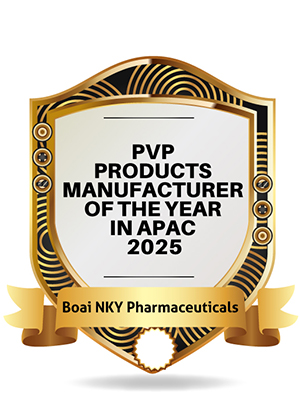
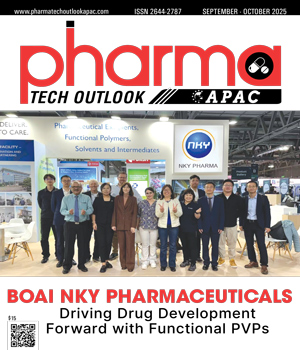
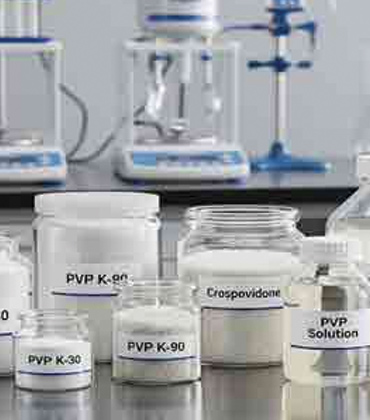
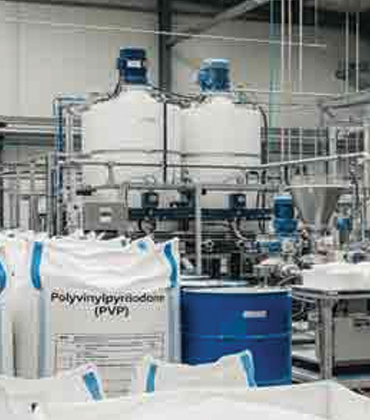
Once regarded as passive additives, excipients have taken on a far more strategic role in pharmaceutical development. No longer just fillers or binders, these materials now directly influence key formulation attributes, such as bioavailability, mechanical integrity, processability and shelf stability. With regulatory expectations growing more exacting and formulation windows tightening, the ability to predict and optimize excipient behavior within complex drug systems has become a defining capability for forward-thinking developers. That’s where Boai NKY Pharmaceuticals leads the market today. Rooted in advanced materials science, NKY designs excipients that not only meet monograph specifications but anticipate the functional realities of modern drug delivery. Every grade is developed with formulation behavior in mind, ensuring consistency across batches, platforms and regulatory environments. Whether addressing solubility challenges, scale-up risks or long-term stability, NKY’s excipients are built to perform where it matters most: inside the finished dose. “Knowing the chemistry is foundational, but it’s only part of the equation,” says Dr. Herb Ulmer, chief scientist. “Our work begins where the datasheet ends. We’re focused on how the excipient performs across the lifecycle, from bench to batch to shelf.” Specializing in polyvinylpyrrolidone (PVP) and PVM/ MA copolymers, NKY serves formulators working across pharmaceuticals, personal care, and food industries. Each excipient is developed considering how it would behave under compression, respond in high-shear environments, interact over time with other actives and withstand real-world storage and transport conditions. Engineering excipients with functional resilience in mind means fewer surprises during tech transfer, reduced formulation drift over time and more consistent performance across global manufacturing sites. Where Formulation Challenges Meet Functional Chemistry While most PVP suppliers focus on meeting purity benchmarks and regulatory checklists, NKY takes the next step, helping clients shift from trial-and-error to performance-driven product development.
Pharmaceutical companies are increasingly recognizing the pivotal role of user-friendly packaging in optimizing medication management and safety. Clear labels, easy to-open designs, and simple disposal procedures are imperative for enhancing the user experience and fostering trust in the product and brand. TOYAMA SUGAKI, an innovative packaging manufacturer specializing in design, printing, and processing, takes a unique approach to improving pharmaceutical packaging. The company actively engages with pharmacists, seeking their valuable opinions on pharmaceutical packaging. With these insights in hand, TOYAMA SUGAKI meticulously refines the shape and design of the packaging, introducing novel functionalities, and presenting them to pharmaceutical manufacturers. “We provide pharmaceutical manufacturers with a wealth of data on user needs. This information helps them solve various packaging problems,” says Takao Sugaki, president of TOYAMA SUGAKI. Prior to the initiation of these efforts, numerous pharmacists voiced concerns about challenges associated with prescription drug packaging. Issues included difficulties in opening certain packages, problems with lids that couldn’t be closed once opened, and the time-consuming process of disassembling packaging for disposal. These problems persisted due to limited channels for users to report packaging issues to pharmaceutical manufacturers, coupled with a lack of awareness regarding the real-world usage scenarios of the packages. Directly engaging with dispensing sites and gathering feedback from frontline workers, TOYAMA SUGAKI has successfully bridged this gap. Over the course of more than ten years, these efforts have contributed to a significant enhancement in the user-friendliness of pharmaceutical packaging. The incidences of difficult-to-open or non-resealable packaging have notably decreased, and many packages now incorporate features designed to alleviate user burdens. One of the functions developed is the ‘One Shot Disposal’ feature, which enables users to crush an empty box effortlessly by simply pressing its corner. The innovative approach involves incorporating perforations in different positions compared to traditional packaging.


Maintaining the integrity of packaging extends well beyond simple containment to encompass the assurance of safety, effectiveness, and regulatory compliance. Amscorp Scientific has emerged as a trusted partner in leak testing across Australia and New Zealand. Its approach to leak testing is designed to provide tailored services to accommodate each customer’s unique products, which include factors such as varying package materials, dimensions, the package contents and other accessories like stoppers, and caps. Amscorp’s experience in the market has allowed them to work on a range of product enclosures and to name a few would be vials, syringes, ampoules, Tyvek, and pouches. A proud family-owned business founded in 1989, Amscorp Scientific stands out for its use of deterministic testing methods. This approach guarantees definitive quantitative results in leak detection, a critical factor in the company’s success, highlighted by its partnership with Packaging Technologies and Inspection (PTI). The firm’s collaboration with PTI, a leading US-based provider of deterministic leak detection technology, has further solidified its position in the industry. The industry-wide transition from probabilistic to deterministic testing methods, as advocated by regulatory standards such as Annex 1 and USP 1207, marks a watershed moment in quality assurance. With Australia’s Therapeutic Goods Administration (TGA) and other regulatory bodies steering away from probabilistic methods, Amscorp’s adoption of deterministic testing highlights its commitment to the highest levels of reliability and precision. This shift from traditional, subjective, and potentially destructive methods like the methylene blue dye test enables the firm to offer innovative solutions that meet the market’s evolving demands. The company’s journey is not just about integrating new technologies; it is about setting a new benchmark for certainty and trust in leak detection. Anthony Georgiadis, Sales Director of Amscorp Scientific, highlights the transformative impact of these methods on the industry’s regulatory compliance and sustainability efforts by stating, “Deterministic methods are, quantitative, non-subjective, repeatable, and often non-destructive.”
Pharma Manufacturing

Dr. Sarah Tregenza, PhD, BSc (Hons), APAC Oncology Medical Affairs Director, Pierre Fabre Group
Pharma Manufacturing

Marcia Matos, Clinical Operations HUB Director for APAC, SERVIER
Drug Discovery and Development

Suci Ameliya Reza Zairizal, Assistant Manage, Novugen Pharma
Pharma Manufacturing

Raymond R. Tjandrawinata, Director of Business Development and Scientific Affairs, Dexa Medica
Pharma Manufacturing

Jon Zdon, Head Medical Governance, Evidence and Patient Access, Novartis, Australia & New Zealand

Pharma Manufacturing
Dr. Israfil Merican, MD, MHM, Director of Pharmaniaga Marketing Sdn Bhd, Pharmaniaga Berhad

Pharma Manufacturing
Imelda Rillon, Corporate Head of Quality & HSSE, Zuellig Pharma
The APAC pharmaceutical industry is expanding in response to growing healthcare demands, with Polyvinylpyrrolidone (PVP) excipients enhancing drug bioavailability, stability, and manufacturing efficiency, thereby driving innovation and growth.
The pharmaceutical industry is shifting towards sustainability, emphasizing greener supply chains for excipients like PVP through the use of innovative solvents and circular manufacturing practices in response to regulatory pressures.
From Bioreactor to Barcode: The APAC’s Quiet Revolution
The manufacturing phase is undergoing its most decisive reinvention in decades. Artificial intelligence now supports everything from molecule screening to real-time batch control, with analysts estimating hundreds of billions in annual value creation. Digital twins allow engineers to test entire production runs virtually before a single vial rolls off the line. Inside the capsule or tablet, another change is at work. Polyvinylpyrrolidone, long used as a binder and stabilizer, is moving into sharper focus. Its global market is projected to rise to nearly $4 billion within a decade, powered by demand from pharmaceuticals, cosmetics and food.
Pharmaceutical packaging has become more than a protective shell. Smart labels embedded with NFC and RFID are linking patients directly to usage guidance, while tamper-evident sensors and temperature trackers are turning each box into a checkpoint of integrity. At the same time, the industry is cleaning up its footprint with recyclable films, lighter designs and automation-friendly formats that reflect a steady shift toward sustainability.
Driven by these trends, the Asia Pacific pharmaceutical market is projected to grow to around $503.9 billion by 2030, at an estimated CAGR of 7.1 percent.
The magazine features a thought-provoking article by Sherene Cham, Regional Director of Ethics and Compliance, APAC at MENARINI Group, who explains how ethics and compliance must sit at the center of every digital strategy. Additionally, an article by Jon Zdon, Head Medical Governance, Evidence and Patient Access at Novartis, Australia and New Zealand, discusses how medical affairs now drives scientific engagement, real-world evidence generation and cross-functional collaboration.
We hope this edition offers insights that help industry leaders and innovators navigate change, strengthen quality systems and stay prepared for what’s next in a world where advanced packaging, high-performance excipients and digitally enabled manufacturing are redefining the future of pharmaceutical resilience and trust across the Asia Pacific.