THANK YOU FOR SUBSCRIBING

Pharma Tech Outlook Weekly Brief
Be first to read the latest tech news, Industry Leader's Insights, and CIO interviews of medium and large enterprises exclusively from Pharma Tech Outlook
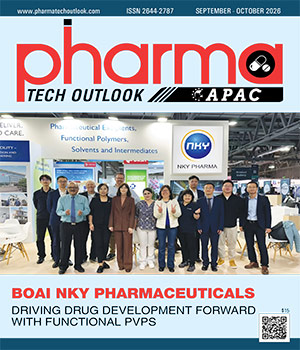
Once regarded as passive additives, excipients have taken on a far more strategic role in pharmaceutical development. No longer just fillers or binders, these materials now directly influence key formulation attributes, such as bioavailability, mechanical integrity, processability and shelf stability. With regulatory expectations growing more exacting and formulation windows tightening, the ability to predict and optimize excipient behavior within complex drug systems has become a defining capability for forward-thinking developers. That’s where Boai NKY Pharmaceuticals leads the market today. Rooted in advanced materials science, NKY designs excipients that not only meet monograph specifications but anticipate the functional realities of modern drug delivery. Every grade is developed with formulation behavior in mind, ensuring consistency across batches, platforms and regulatory environments. Whether addressing solubility challenges, scale-up risks or long-term stability, NKY’s excipients are built to perform where it matters most: inside the finished dose. “Knowing the chemistry is foundational, but it’s only part of the equation,” says Dr. Herb Ulmer, chief scientist. “Our work begins where the datasheet ends. We’re focused on how the excipient performs across the lifecycle, from bench to batch to shelf.”
Yoshizumi Tanaka, General Compliance Officer of Quality Assurance
Manufacturing effective and safe medications for patient treatment is a highly regulated process that necessitates compliance and adherence to strict quality norms. Continuous refinement of quality systems eliminates gaps in medicinal quality standards, guaranteeing consistency globally. Nippon Shinyaku Co.,Ltd(NS) is an R&D-based pharmaceutical company that develops medical drugs to treat rare diseases. It has specialized in developing low molecular products and phosphorodiamidate morpholino oligomers (PMO) acceptable in U.S. and Japanese markets. The company maximizes product value by out-licensing proprietary drugs in line with regional regulations and in-licensing promising drugs manufactured by other pharmaceutical companies. “Our focus lies in contributing to the advancement of healthcare on a global scale and greatly impacting every patient’s well-being,” says Yoshizumi Tanaka, general compliance officer of quality assurance at NS. NS’s groundbreaking drug development practices have strategically focused on drug for intractable diseases. It has obtained approval for the first-ever PMO, Viltepso, designed for treating Duchenne muscular dystrophy.


Cytel is a multinational clinical research organization and statistical software developer headquartered in Waltham, Massachusetts. The company is renowned for its expertise in optimizing clinical trials through advanced analytics and adaptive trial designs. Founded in 1987 by research scientists at Harvard University and MIT Cyrus Mehta and Nitin Patel, it has grown into a global leader, supporting drug development for 37 of the world’s 40 largest pharmaceutical companies and regulatory agencies like the U.S. Food and Drug Administration (FDA) and the European Medicines Agency (EMA). With over 1,900 employees across 15 North American, European, and Asian offices, Cytel operates at the intersection of statistical innovation and operational execution, contributing to more than 300 adaptive trials annually. From its early days as a provider of DOS-based statistical tools to its current role as a developer of AI-enhanced clinical trial platforms, the company has remained committed to advancing clinical research methodologies. “As the world’s leading data-science CRO and pioneers in adaptive trial design, we leverage the power of data to inform your strategy at every stage of drug development,” says Yannis Jemiai, Chief Scientific Officer of Cytel. At the core of Cytel’s offerings is its ability to solve complex challenges in clinical trial design and execution. As a pioneer in adaptive trial methodologies, the company has developed flexible frameworks like group sequential designs and Bayesian approaches, gaining widespread acceptance among major regulatory bodies. These methodologies allow trial sponsors to modify study parameters based on interim data, reducing costs and accelerating timelines while maintaining statistical rigour. The biostatistics and programming division provides end-to-end support, from protocol development to regulatory submissions, with specialized expertise in rare diseases, oncology, and cardiovascular research. Further expanding its capabilities, Cytel strengthened its real-world evidence solutions in 2024 by partnering with OneMedNet. This collaboration integrates medical imaging data with electronic health records to enhance observational studies in oncology and cardiology. This collaboration exemplifies the company’s strategy to bridge traditional clinical trial data with real world insights for more robust evidence generation.
eClinical Trial Management
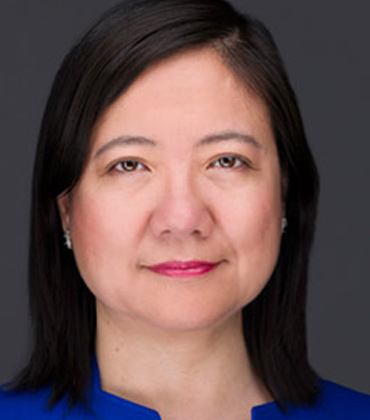
Haichen Yang, MD, MA, MBA, Vice President, Clinical Research, Amicus Therapeutics Inc [NASDAQ: FOLD]
eClinical Trial Management

Narayana Rao, Vice President of Biopharma, Asia Pacific Middle-East Africa, Avantor [NYSE:AVTR]
Pharma Manufacturing

Dr. Israfil Merican, MD, MHM, Director of Pharmaniaga Marketing Sdn Bhd, Pharmaniaga Berhad
Pharma Consulting
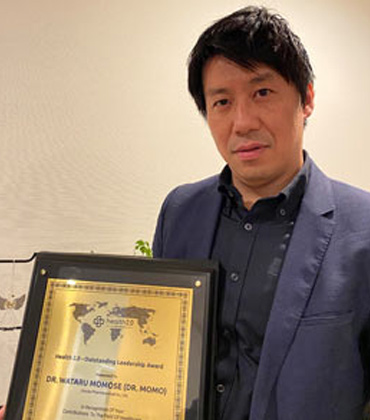
Wataru Momose, Ph.D., Director of Business Strategy, Otsuka Pharmaceutical Co [TYO: 4578]
Pharma Manufacturing

Armand Matejunas, Sr. Director, Clinical Data Operations, Pacira BioSciences, Inc
Drug Discovery and Development

Suci Ameliya Reza Zairizal, Assistant Manage, Novugen Pharma
Clinical Trial Management

Kathleen Kee, Head of HR–EMEA & Asia, Santen [TYO: 4536]

Pharma Manufacturing
Raymond R. Tjandrawinata, Director of Business Development and Scientific Affairs, Dexa Medica

Pharma Manufacturing
Imelda Rillon, Corporate Head of Quality & HSSE, Zuellig Pharma
The APAC region is becoming a key hub for clinical trials, with pharmaceutical distributors evolving into critical partners by providing specialized logistics, regulatory expertise, and technological solutions.
The APAC pharmaceutical sector is shifting to virtual trials and real-world evidence, enhancing clinical research efficiency, cost-effectiveness, and patient access across diverse populations.
Redefining Pharma Supply and Clinical Research Innovation
Artificial intelligence now underpins more intelligent forecasting, helping spot risks early, manage inventory efficiently, and reduce waste. Blockchain strengthens trust by creating tamper-proof records that track every step from manufacturer to pharmacy.
Warehouses are getting faster and more accurate with automation and robotics replacing manual tasks. Orders move quickly, even as volumes grow and delivery windows shrink.
This drive for efficiency extends to clinical trials. Decentralized models, wearable devices, and remote monitoring gather real-world patient data with less disruption. Researchers gain richer insights, and participants benefit from more flexible trial experiences.
Market growth highlights this momentum. Pharmaceutical distribution solutions could reach about $503.9 billion by 2030, growing 7.1 percent annually. The clinical research organization market may reach $35 billion by 2034, with about 11.8 percent annual growth. Clinical trial endpoint solutions could reach $9 billion by 2050, expanding around 14.1 percent yearly.
Together, these advances point to a supply chain and research landscape that is faster, more resilient, and more responsive to real-world care.
The magazine brings thought leadership articles from Dr. Israfil Merican, MD, MHM, Vice President - Head of Biopharma and Patient Access, Pharmaniaga Berha, stressing the importance of scaling 4IR technologies to build resilient, sustainable, digitally driven pharmaceutical manufacturing. Wataru Momose, Ph.D., Director of Anti-Tuberculosis Project (Global TB project), Otsuka Pharmaceutical Co, also highlights the critical need for rigorous pharmaceutical quality assurance to prevent tragedies caused by contaminated drugs and ensure patient safety throughout the product lifecycle.
This edition features Pharmaceutical Packaging Solutions Provider in APAC, Clinical Research Organization in APAC, and Pharmaceutical Quality Assurance Solutions Provider in APAC. We hope you find the right partner to meet your organization’s needs.